









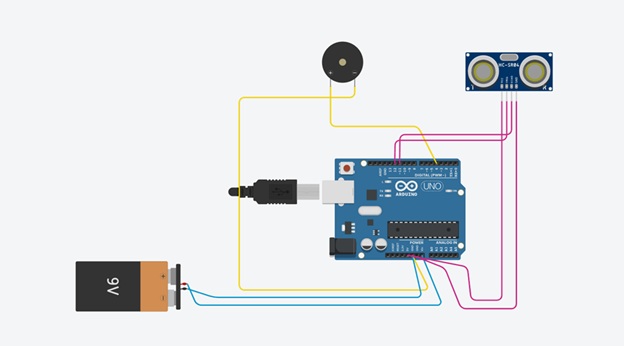
Thinkercad Circuit
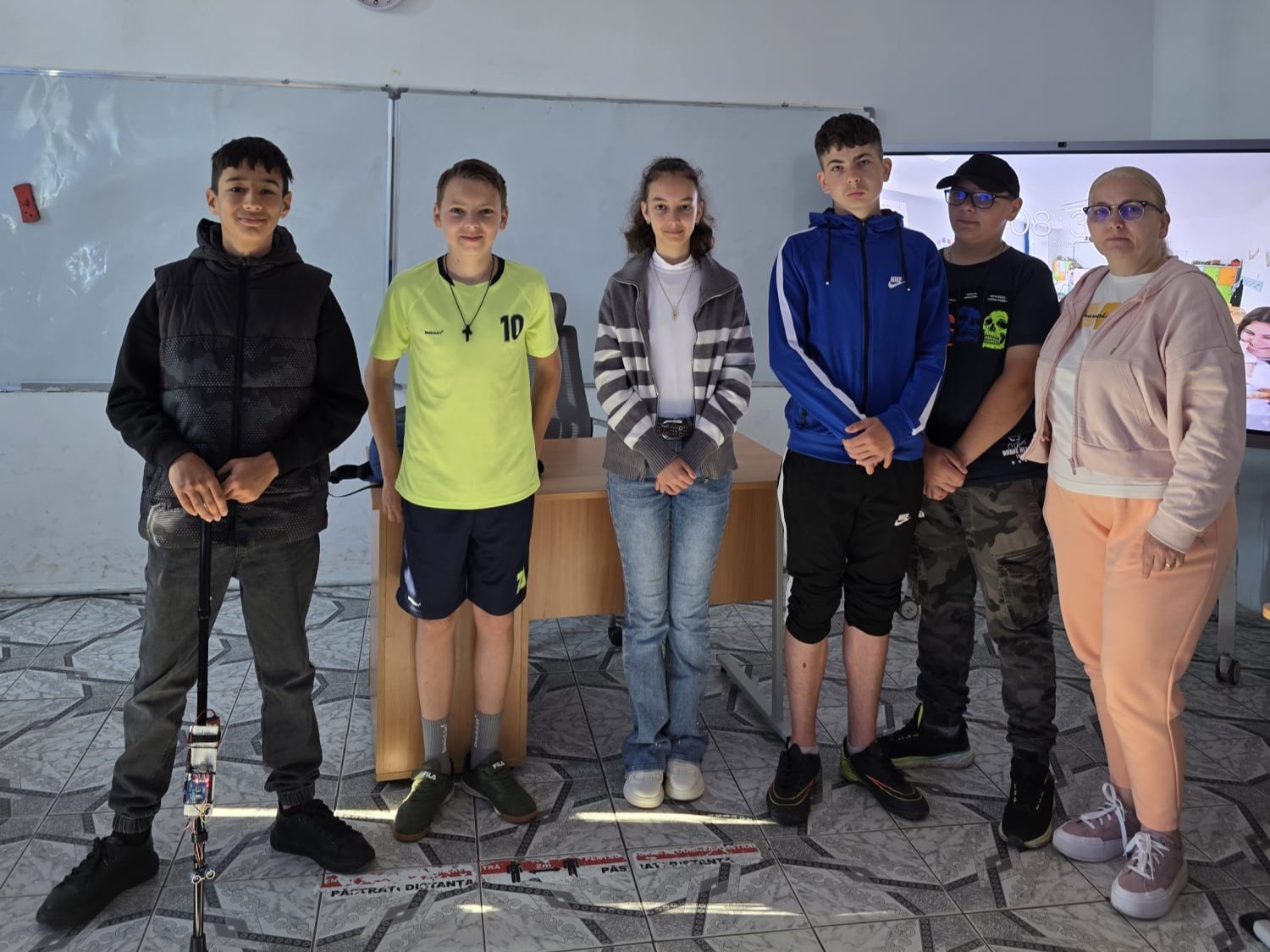
How we build the Smart Cane:
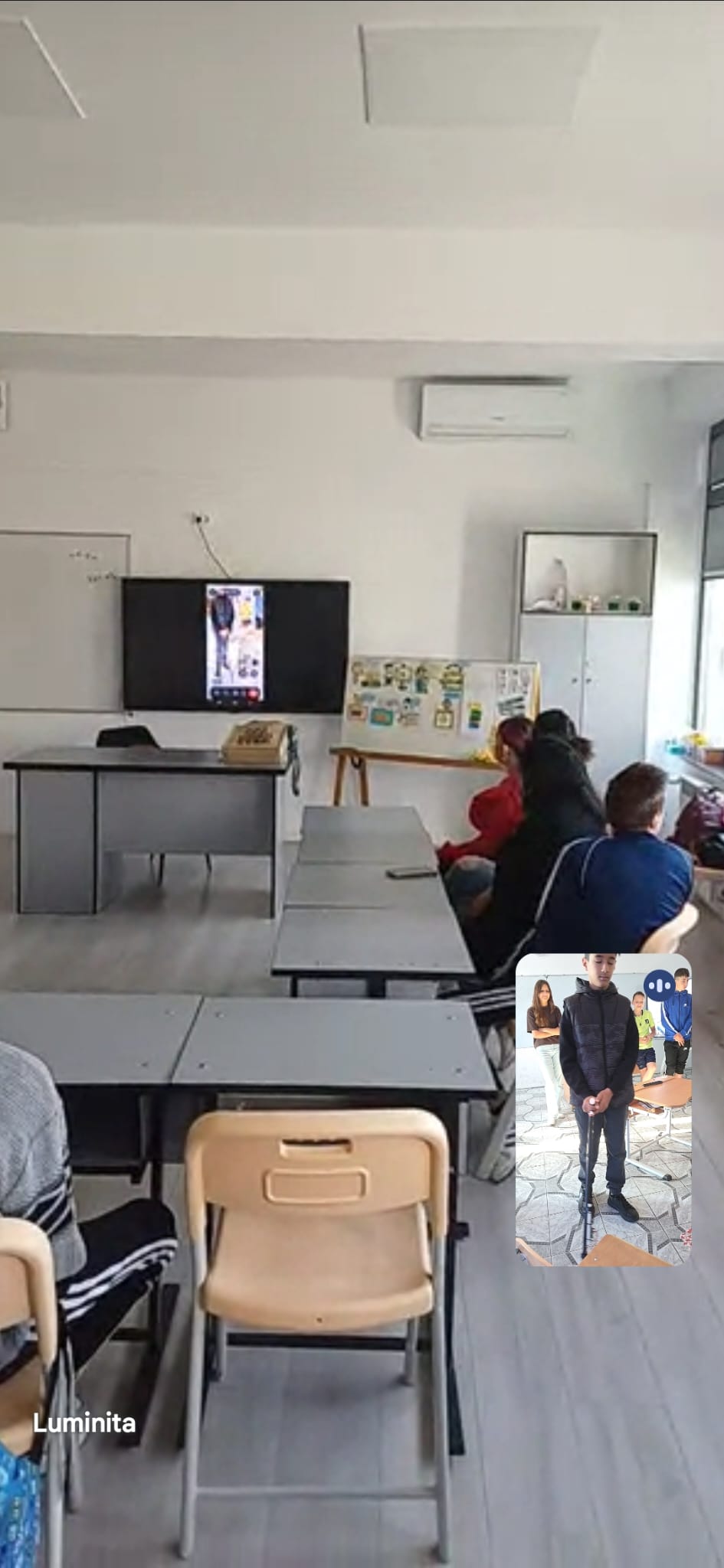
First, we designed and tested our circuit in Tinkercad, a free online simulator. This allowed us to experiment without any risk — we could try different connections, test the code, and fix mistakes before touching any real components.
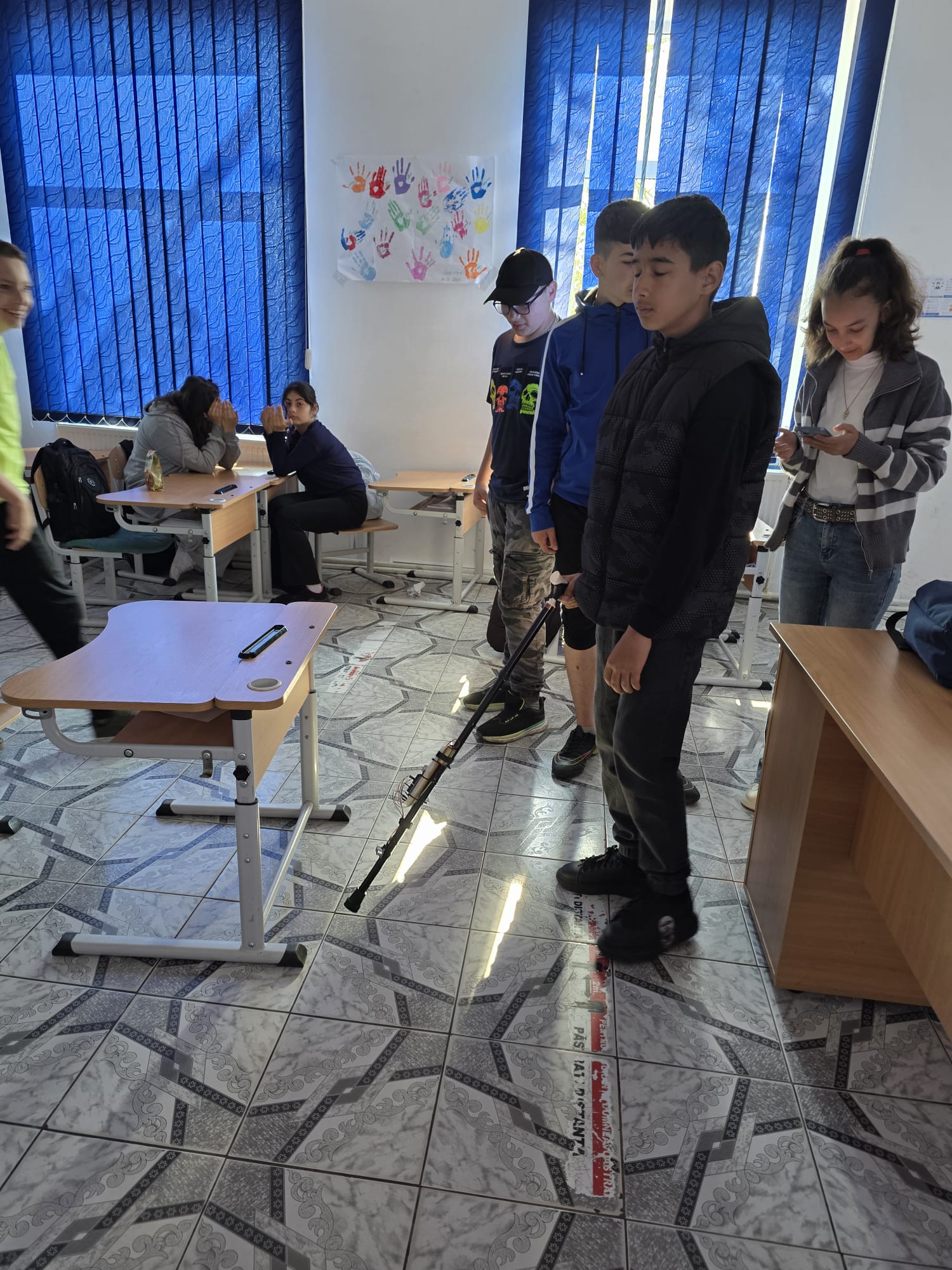
Once the simulation worked, we moved to the real world. We used an Arduino Uno as the brain of our device, one HC-SR04 ultrasonic sensor to detect obstacles in front, and a buzzer to alert the user with sound. All the wiring was done on a breadboard, and we powered everything through a simple USB connection.
We wrote the code ourselves in the Arduino IDE. The logic is straightforward: the sensor constantly measure the distance to nearby objects, and if something is closer than 30 centimeters, the buzzer turns on to warn the user.
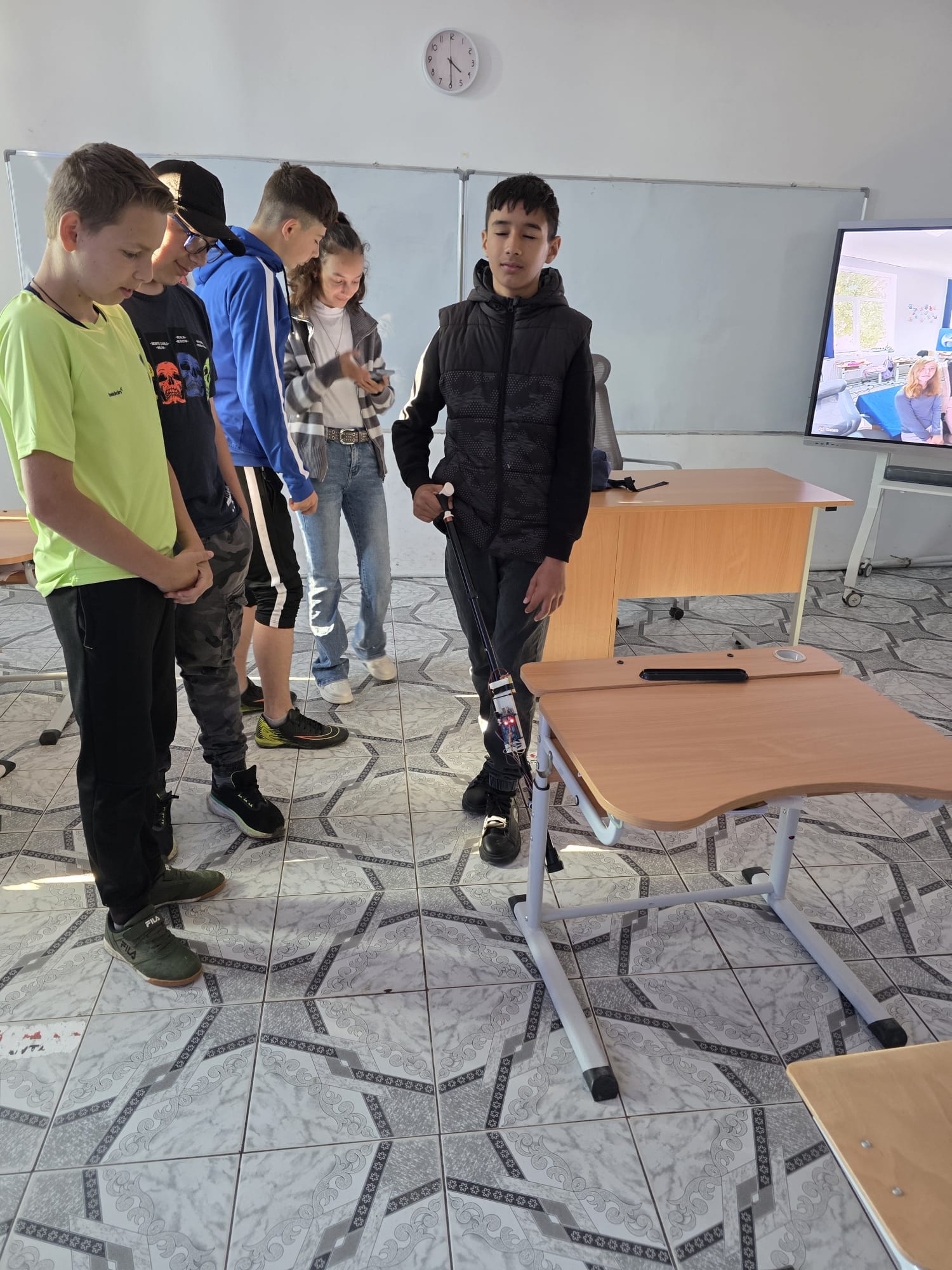
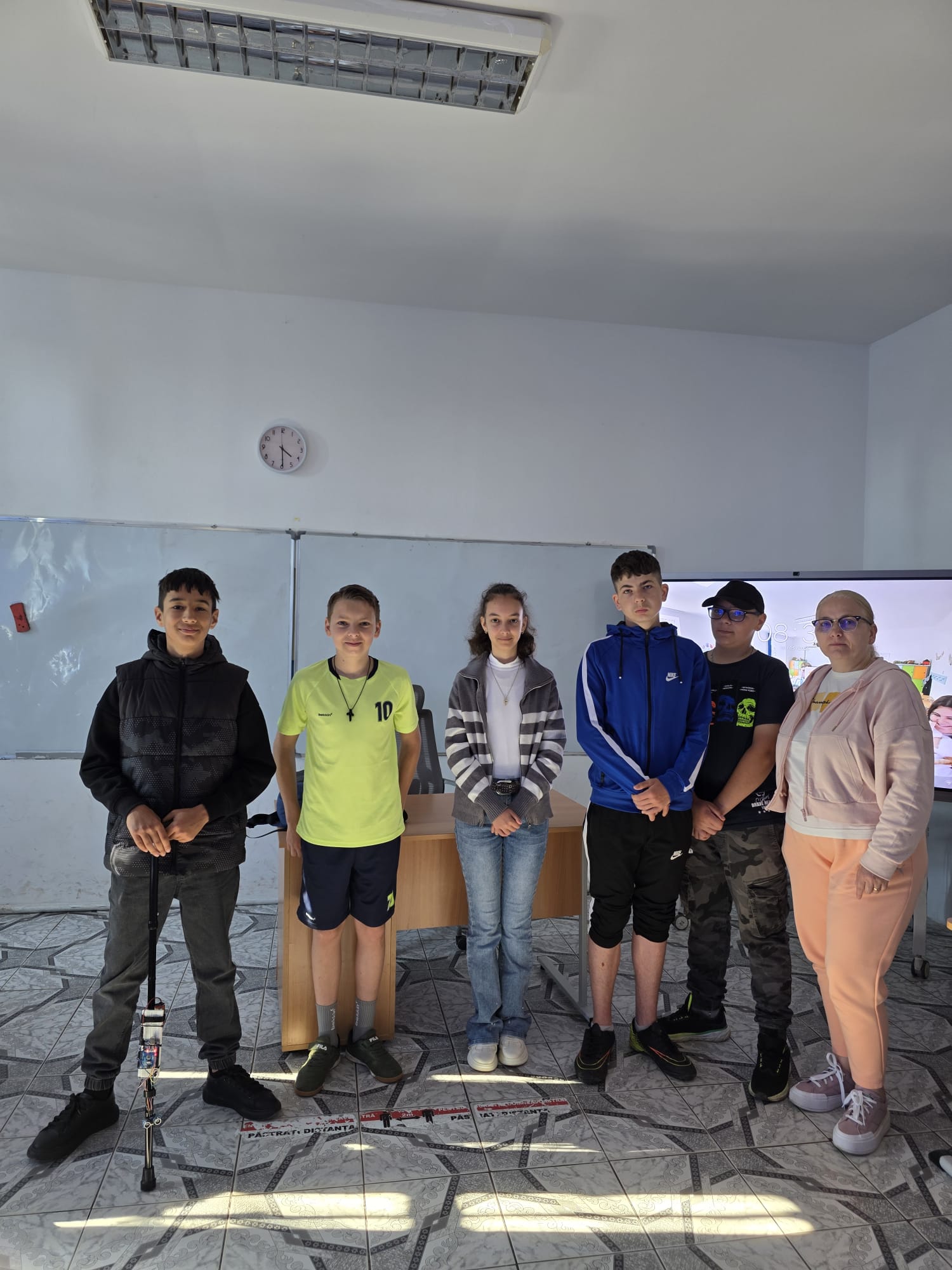
Finally, we mounted everything onto a cane using zip ties. It’s not a factory product — it’s a prototype built by students. But it works, and it proves that even with basic tools and a willingness to learn, young people can create technology that helps others.
Why this project matters
- Technology can change lives — with just a few simple components and some code, we built a device that can help a visually impaired person walk safely.
- You don’t need to be a professional engineer to make a difference — we’re still in school and we built a working assistive device from scratch.
- Over 280 million people worldwide live with visual impairments — projects like this show that affordable solutions are possible, not just expensive ones.
- Our device costs under €20 in parts — while commercial assistive devices can cost hundreds of euros. Technology should be accessible to everyone.
- We learned that real engineering is about solving real problems — not just blinking LEDs, but building something that actually helps someone.
- This project taught us that coding is not just about screens — it connects to the physical world and can improve people’s daily lives.
- Every great invention started as a simple prototype — our cane may look basic, but the idea behind it is powerful.
- STEM is not just science and math — it’s about caring enough to use your skills for others.